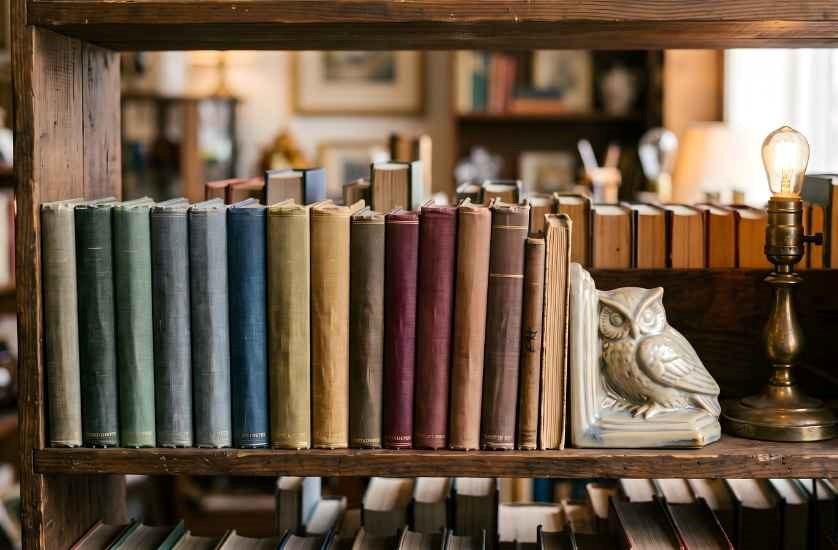
We no longer need to keep manuscripts under lock and key, fearing how easily the written word can be destroyed. Yet we remain fascinated by antique bookends, many of which served as both security and organisation.
For some, collecting antique bookends from across the ages is as fascinating as collecting the books themselves.
Major eras and styles
Bookend styles have evolved over time, reflecting the period's artistic style, from medieval to Art Deco. Some bookends have obvious design features that make them easy to date, such as Renaissance Revival.
Bookends, as we know them, likely didn't exist during the Renaissance period, when people often kept books on desks and lecterns. If they were ever kept standing up, they were more likely chained in place.
What we think of as Renaissance bookends actually date from the later 19th-century revival. These bookends feature ornate designs intricately carved from marble and alabaster. Expect recurring themes of fruit and foliage, scrolls, and shields.
We can be more certain about the Art Deco period. Bookends that reflect this style feature geometric designs and opulent materials. Their striking designs include stylised animals, modern dancers, and Egyptian-inspired imagery. Look out for elephants, cats, birds, and sea creatures.
Common materials
The materials used to make antique bookends vary by era. Marble and alabaster are typical of the Renaissance Revival, reflecting the monumental sculpture and prestigious interiors it sought to emulate.
Art Deco bookends also used opulent materials like onyx and marble, though they were often paired with metal, glass, or Bakelite. A typical look for this period is a solid stone or wooden base topped with a bronze- or chrome-plated figure.
These materials combine the practical with the decorative. By their very nature, bookends must be heavy and durable. Bronze, brass, marble, and oak all fill this role, which is why people still use them to make bookends today.
Where antique bookends are typically sold
Finding antique bookends is easier than you might think. If you enjoy the thrill of discovering them yourself, then there’s no better pastime than wandering around markets and fairs that specialise in antiques.
You can also spend that time in second-hand shops, even charity shops, digging up things you didn’t expect to discover. Or you can go straight to the source and find them online on resale websites like eBay or specialist antiques websites like The Hoarde that bring together dealers from across the country.
Questions to ask a seller before buying
Before you buy, determine the authenticity of the piece you’re interested in. Start by asking these questions:
- Condition: Check the piece's condition before you agree to buy. Antique and vintage items are worth more when they’re fully intact. If there are scuffs, scratches, or broken bits, they may not be worth the asking price.
- Origin/era: Look for makers’ marks and historical features like those described in this piece that might provide clues as to when and where the bookends were made. Establishing this will help you affirm their value.
- Provenance: Ask the seller for any evidence of the item’s provenance. Who owned the bookends, and how did they come into the seller's possession? Genuine antiques often come with documents that outline their ownership.
Caring for your antique bookends
Prolonging the life of your antique bookends will likely be front of mind once you’ve invested. As a general rule, avoid harsh chemicals. Household cleaning products contain chemicals that can damage your bookends irreparably. Even water can stain or corrode some pieces, so don’t soak or rinse them.
Use a dry, soft cloth to remove dust gently, taking care around decorative details and joints. If a piece needs more than dusting, start by identifying its material and finish to understand its specific cleaning requirements and preserve its condition and original appearance.
For valuable or fragile pieces, consult an antiques conservator rather than attempting a repair or deep clean yourself.