Stone troughs have been used and repurposed in gardens for generations, and for good reason. They provide a practical, aesthetically pleasing water source for wildlife and pets, and create interest in your outdoor space. In this blog, we will cover the range of uses for troughs, how to choose the right one and where to place them.
Why antique troughs work so well outdoors
Antique troughs have a naturally weathered patina that most modern solutions don’t have. This helps them blend naturally with the planting and hard landscaping that may already exist in your garden. They are also heavy and permanent, meaning they can anchor a space and create a sense of history, without the risk or worry that they may be knocked over or easily broken.
Each antique trough is unique, usually because it is hand-carved, but also because of its wear and patina. This means you are almost guaranteed to find one that fits your garden's style, whether that's a formal courtyard, a cottage garden, a modern minimalist scheme, or a rural setting.
Ideas for using troughs in gardens and courtyards
There are a range of different ways that you can use troughs in your outdoor spaces.
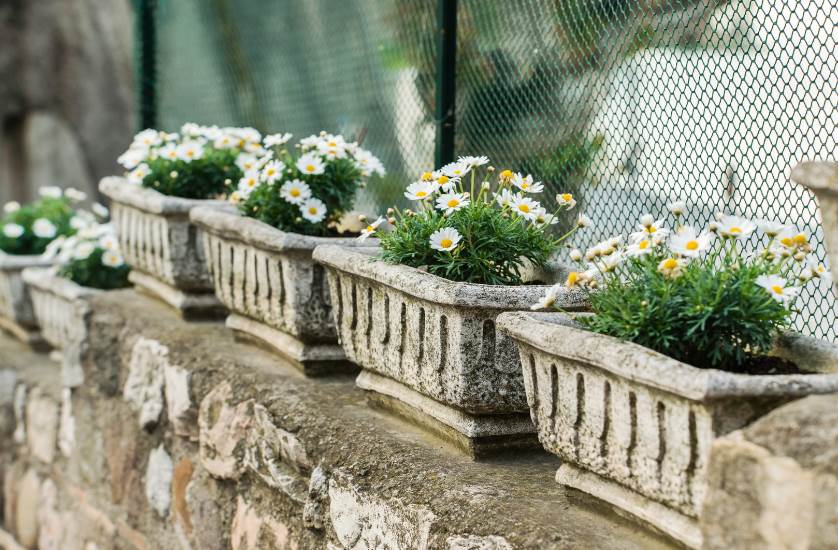
As a planter: Perfect for succulents, trailing herbs, or a single statement planting.
As a water feature: Fill your trough with water to create a still pool that attracts birds and insects.
As a sculptural focal point: Leave it empty and simply let the stone speak for itself. This can work well against a wall or at the end of a path.
Paired or grouped: Two matching troughs at an entrance can help to frame the space, ir try using a cluster of different sizes for layered interest.
What to look for when buying
When purchasing antique water and stone troughs, there are a few practical considerations to keep in mind.
Material - Whether it’s sandstone, limestone, granite or slate, each weathers differently. Think about how you want the piece to look in years to come, as well as now.
Condition - Chips and wear add character, but it’s important to check them, just in case they actually lead to deeper, structural cracks that could worsen with frost.
Drainage - If your plan is to use the trough for planting, make sure there are drainage holes, or at least the ability to add one.
Size and weight - Make sure to measure your space and access. These pieces are heavy, so you must consider how it will be delivered and how you will safely move it to your final chosen position.
Placement tips
Make sure to think about placement. It’s important to make sure your trough is sat on a level surface, whether that’s gravel, paving, or a low plinth. Position it where it will be seen and appreciated, such as near seating, along a path or visible from a window.
Consider your backdrop. This could be a clipped hedge, a weathered wall or just some simple planting behind your trough. Having a simple backdrop helps to keep the focus on your trough. You can even make sure it is partially sunk into gravel for an established look.
Finding your stone trough
Your piece should fit your aesthetic while still being functional. Buying a trough should be a relatively simple process: choose a piece with presence, decide its purpose (planting, water, or sculpture), and place it somewhere it can be the focal point of a simple space.