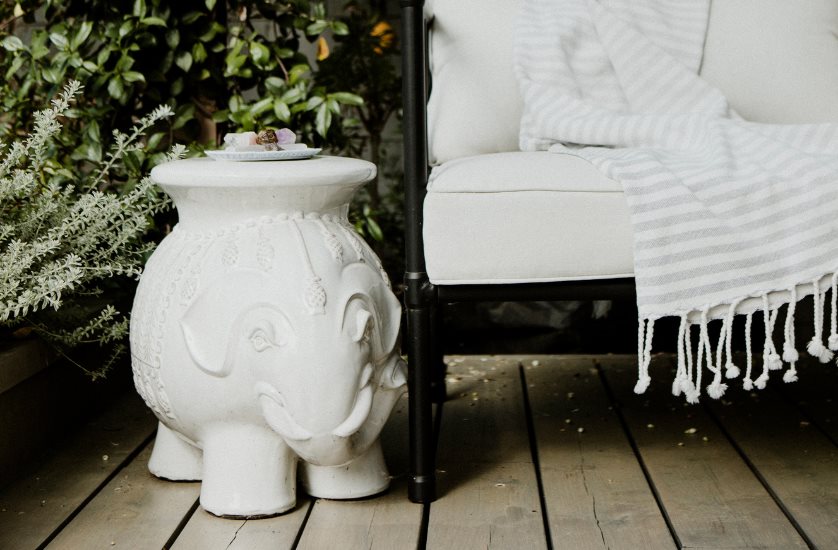
Put simply, elephant tables are tables featuring elephant motifs, carvings or bases. They hold cultural significance, especially across Africa and Asia, drawing heavily on their decorative arts. In this blog, we are going to cover why these tables stand out, their history, and the different ways they can be featured in your home.
Why elephant tables stand out
Elephant tables naturally have a visual impact; they’re bold, sculptural and conversation-starting. They stand out because they blend artistic and sculptural design with daily functionality. In many cultures, elephants symbolise wisdom, strength and good luck, which is why these pieces often appeal to collectors and decorators. These tables offer a lot of versatility for styling and are often used as side tables, coffee tables, or even plant stands. They fit into a diverse range of decorative styles, from luxurious, high-end spaces to cosy, artistic or bohemian rooms. Often featuring hand-painted or carved finishes, elephant tables can bring an exotic or traditional element to home interiors.
Their popularity stems from their ability to add a personal, often maximalist touch to a room, making them a great choice for those who make a conscious effort to avoid mass-produced, generic furniture.
Cultural significance and history
With strong cultural roots in African, Asian and colonial design traditions, elephant tables often reflect skilled craftsmanship and storytelling through their decorative details. They were particularly popular in Anglo-Indian, Southeast Asian, and African-inspired interior design, serving as both functional furniture and symbolic, decorative or conversation pieces.
In many cultures, especially in India, elephants represent strength, patience, and wisdom, and in Feng Shui and Vastu Shastra, using elephant decor is believed to attract good fortune, wealth and abundance
Design versatility
Elephant tables can be used in a variety of settings, including living rooms, entryways, and bedrooms, and as accent pieces. Their adaptability to various interior styles is what makes them so sought after. From eclectic and bohemian to traditional and contemporary styles, elephant tables can work for you. Another key feature to note is their unique shapes and materials; wood, metal and stone, as they add character and individuality to a space.
The design versatility of elephant tables lies in their ability to help bridge the gap between function, storage and sculptural decor.
Decorating tips
Some practical tips for styling elephant tables include pairing them with neutral or bold decor, using them as side tables or coffee tables, or letting them shine as standalone statement pieces. It’s important to balance their ornate design with other furnishings so they don’t look out of place and to maintain their finish. Placing elephant tables near neutral-toned furniture allows the piece to serve as a focal point. Their appearance can be enhanced using metallic accessories to add glamour, or paired with plants and textured rugs to create a curated, worldly atmosphere.
Finding your elephant table
Elephant tables possess a unique charm and decorative impact. They can work in a variety of spaces, making them a perfect addition to almost any home, and they act as a brilliant conversation piece. There are scores of places you can find mass-produced elephant tables, but you’ll find the real deal dotted across the UK in auction catalogues, vintage shops and online antique furniture collections.