Theatre Scenery Boards
Stock No
THOA1107
2021
- £1,250.00
- €1,455 Euro
- $1,671 US Dollar
Questions about this item?
Like this item?
Item Description
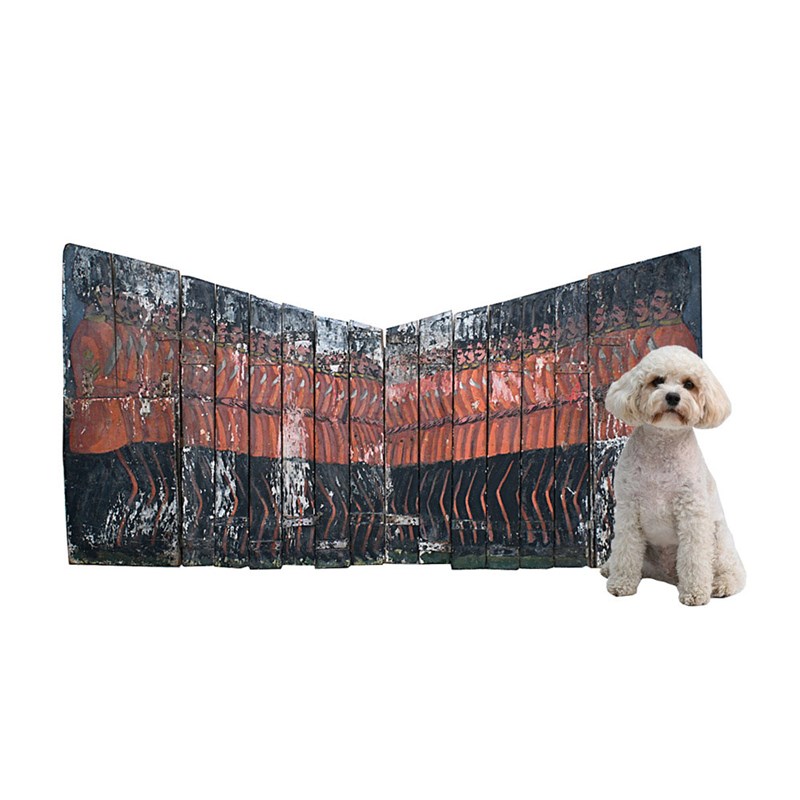
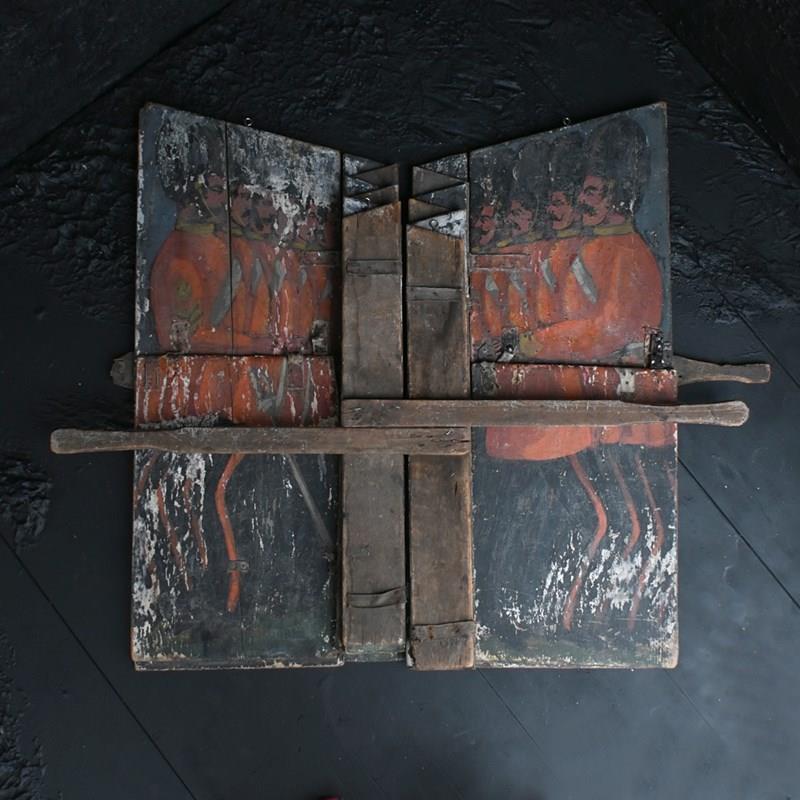
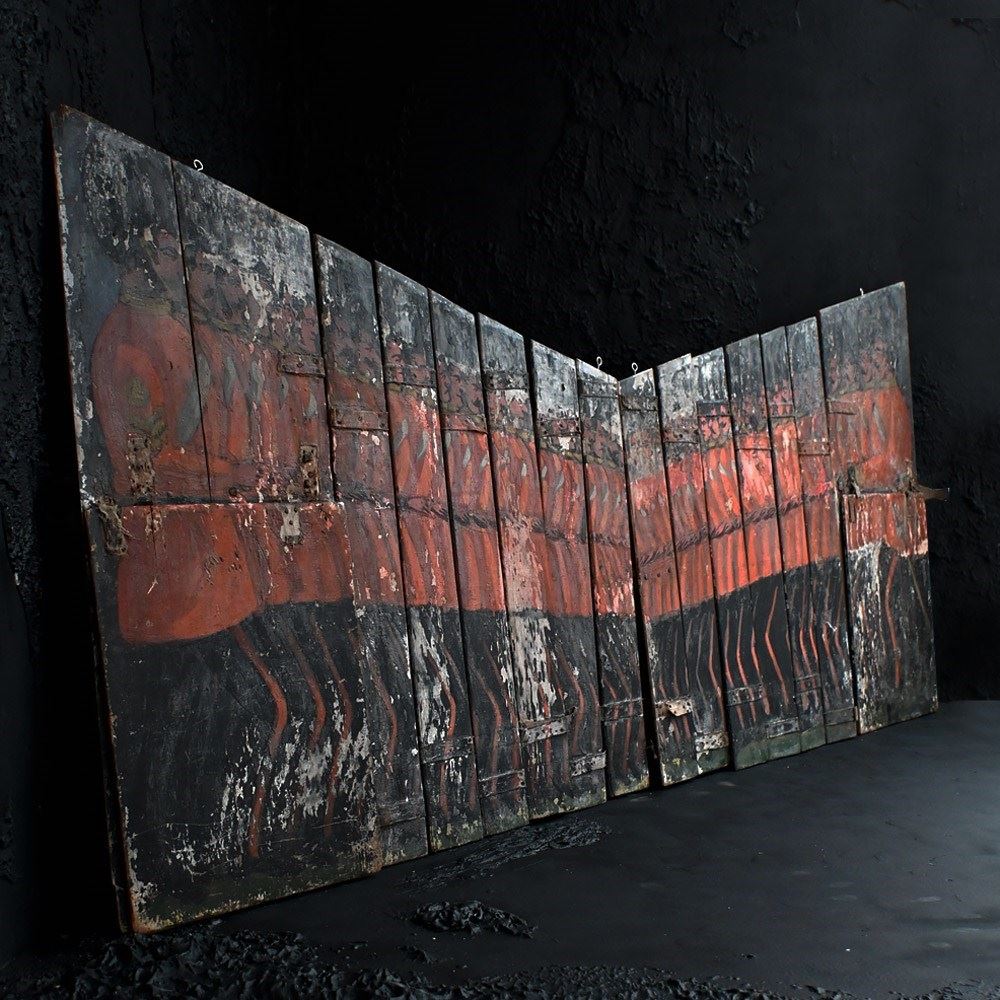
Rare Late 19th century English theatre scenery boards
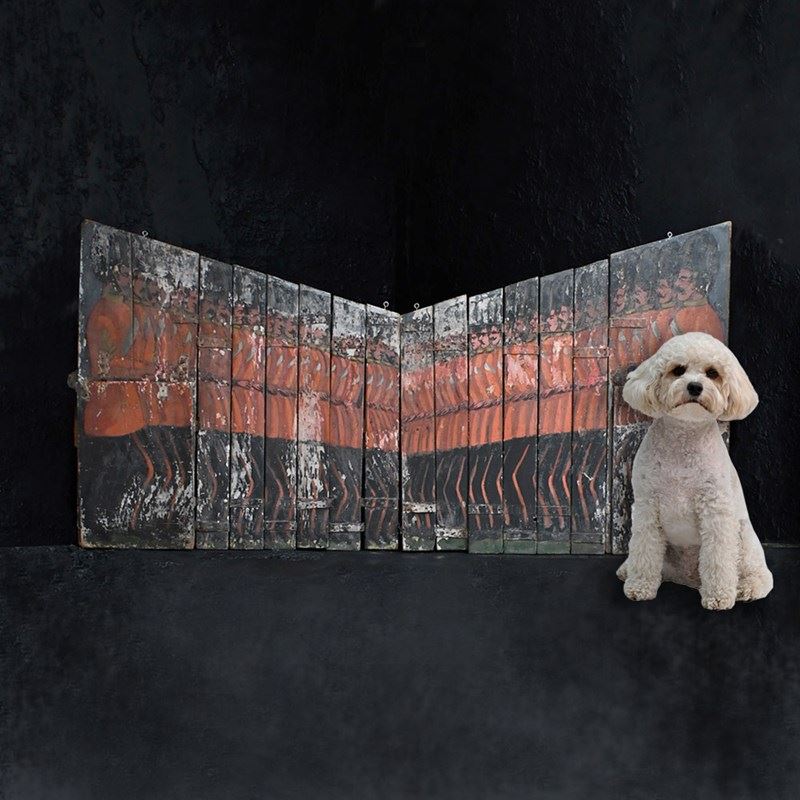
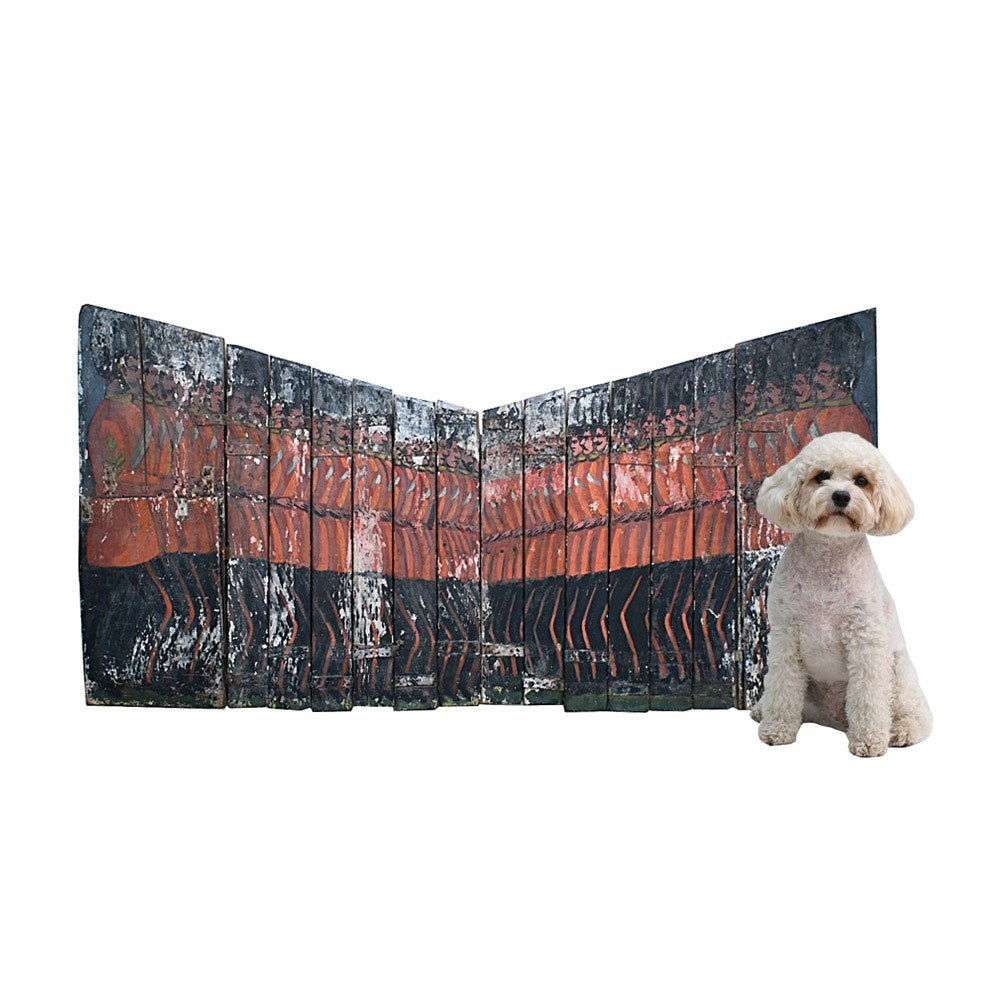
Dimensions in inches: H 30” x W 36” x D 0.5” (both opened 72” width)
Age: 1880
Origin: United Kingdom
Condition: Worn
Overview
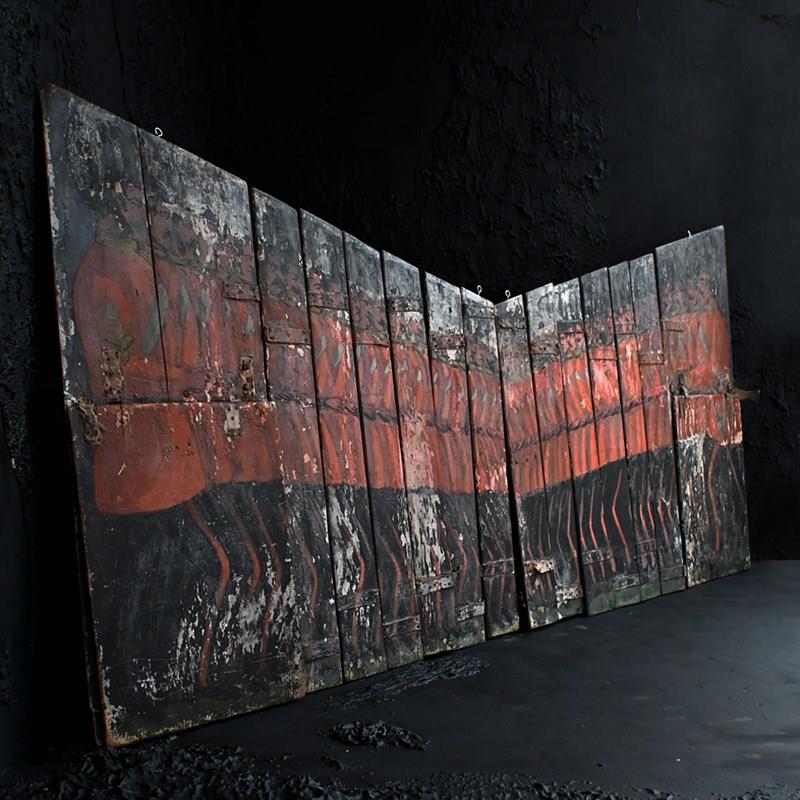
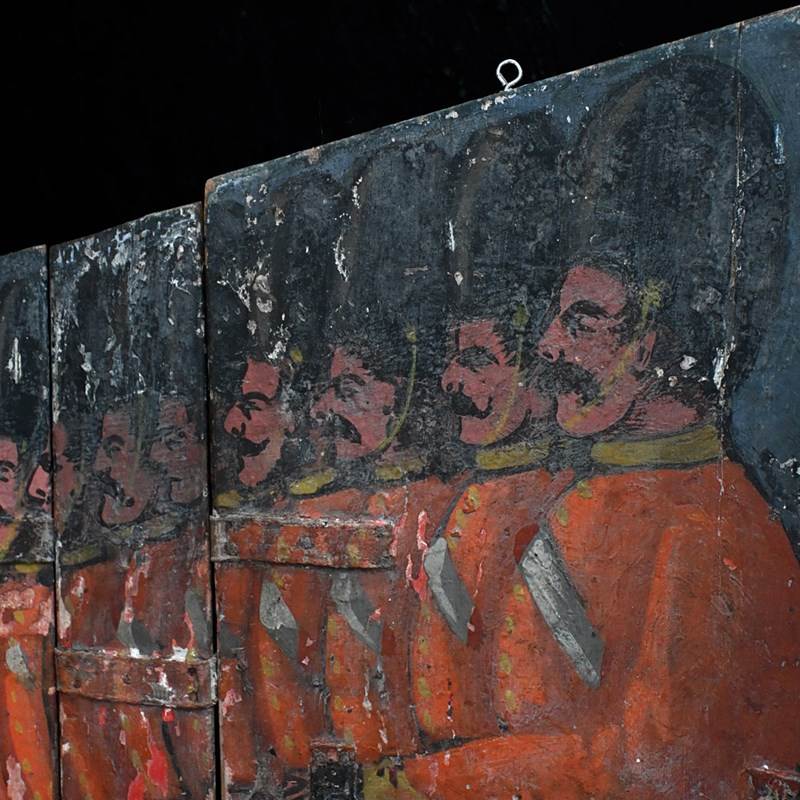
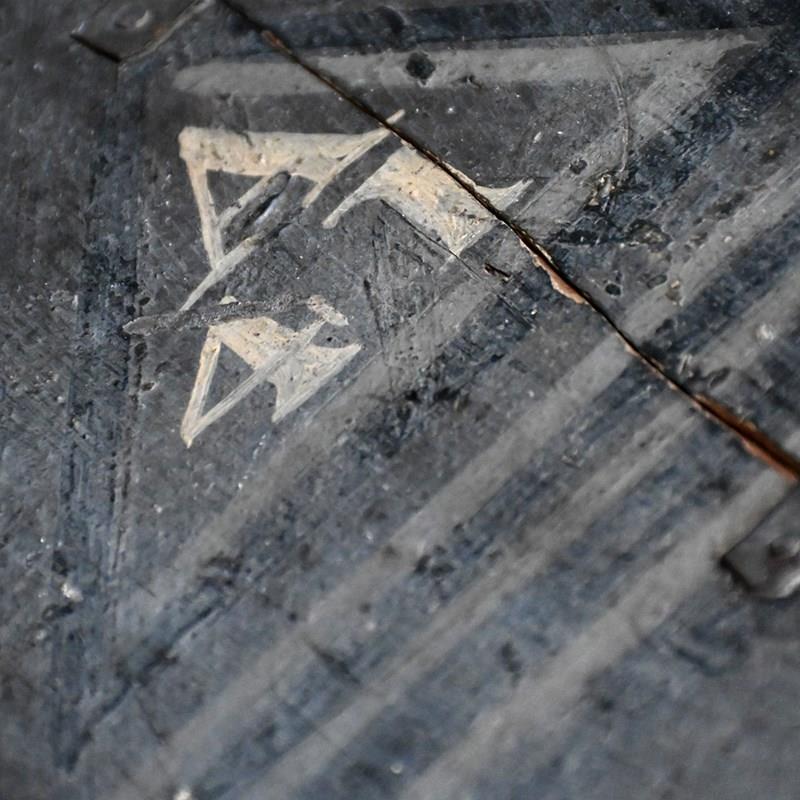
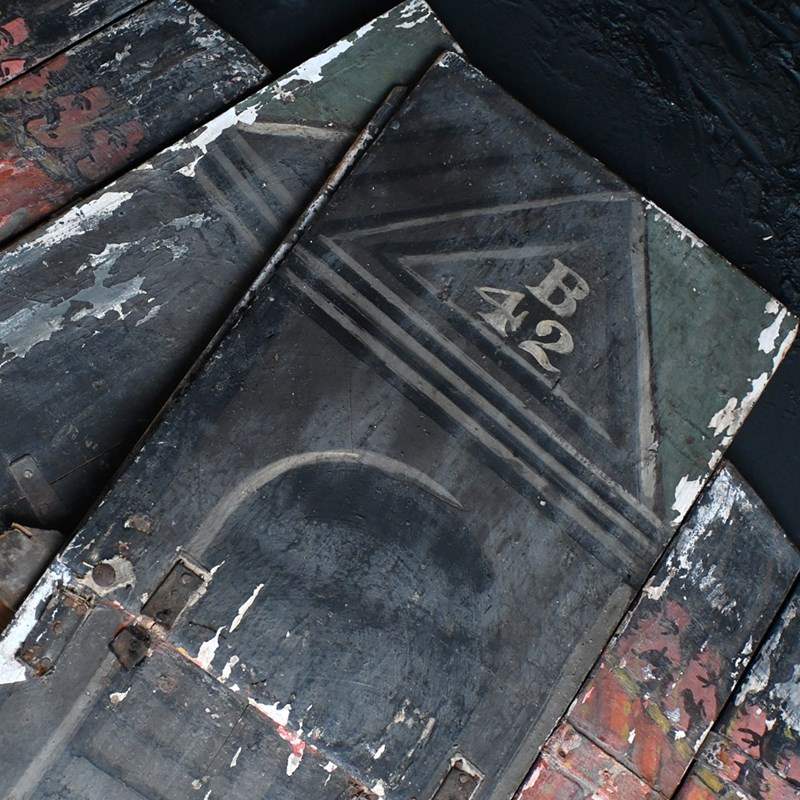
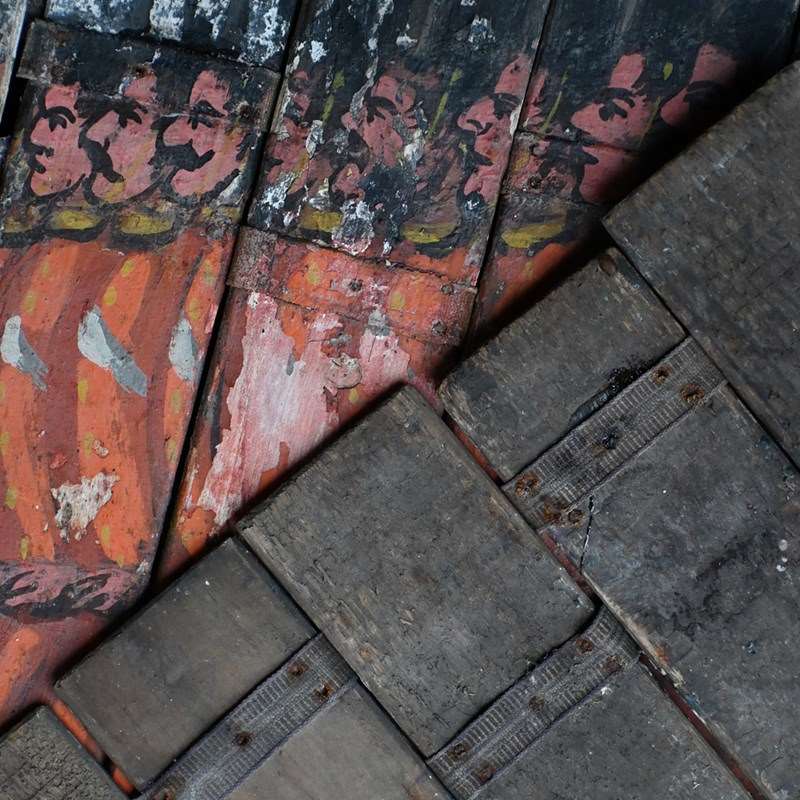
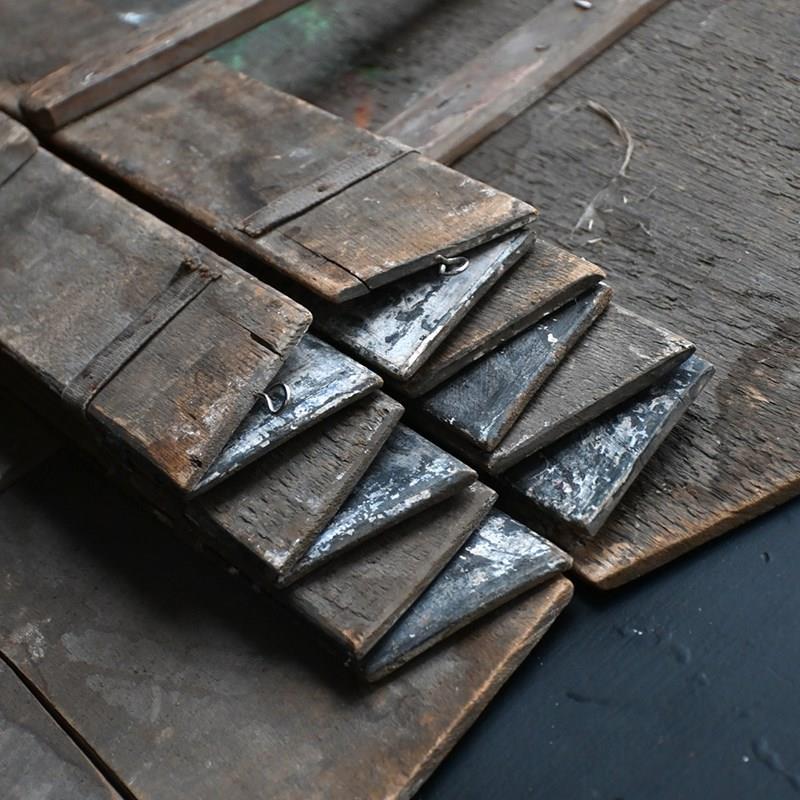
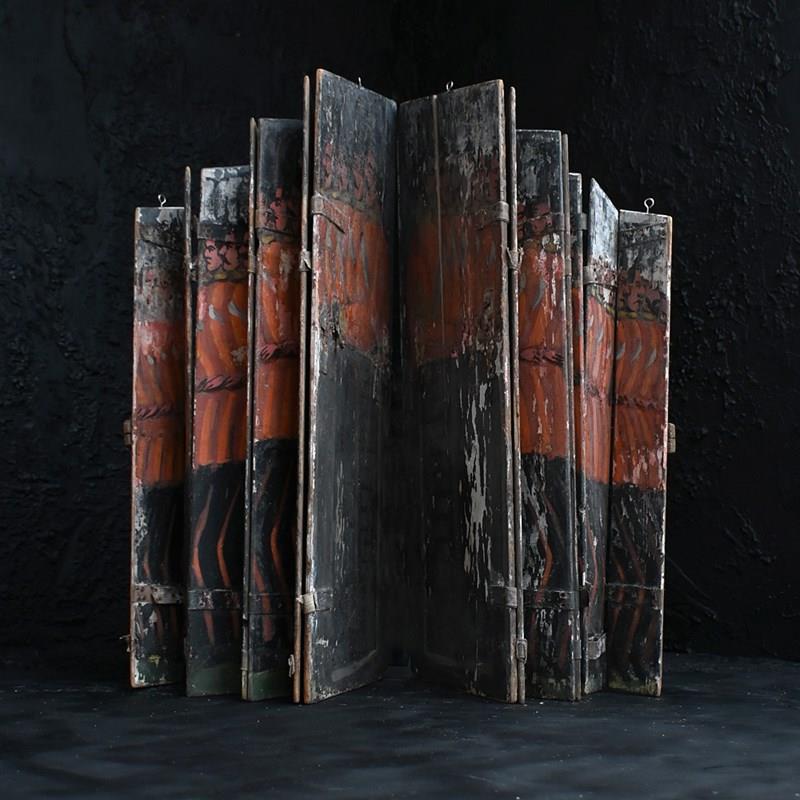
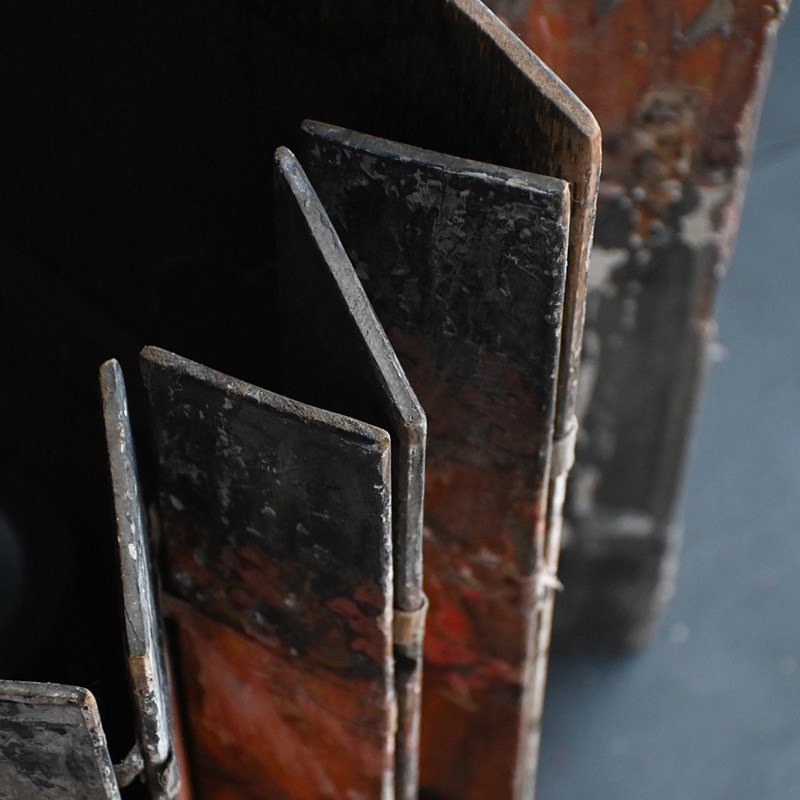
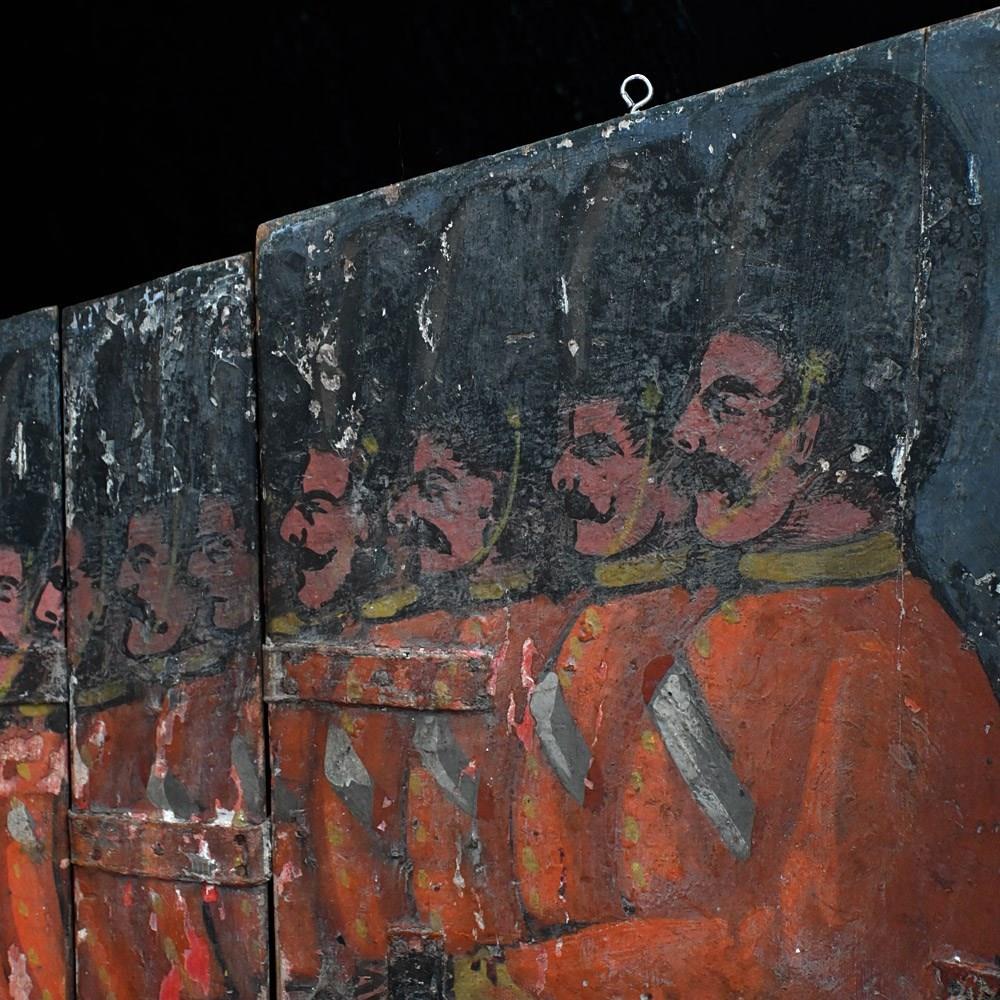
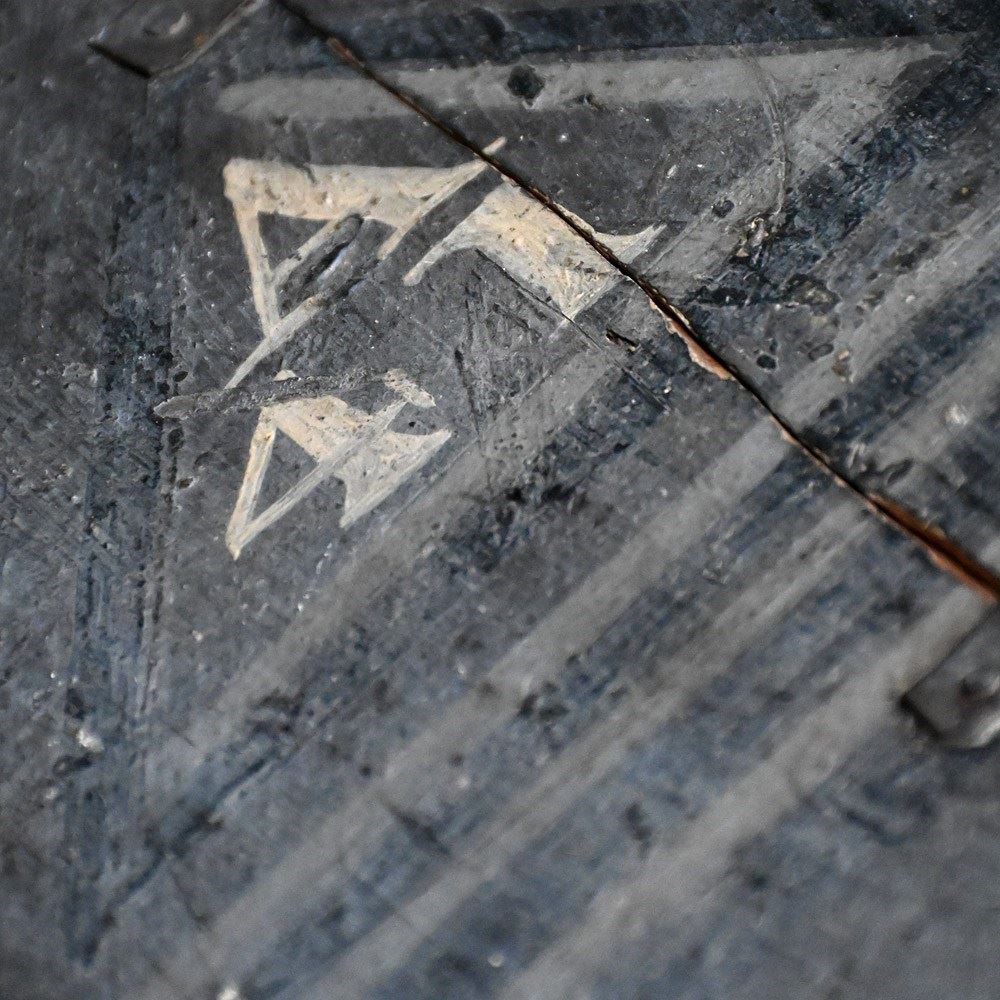
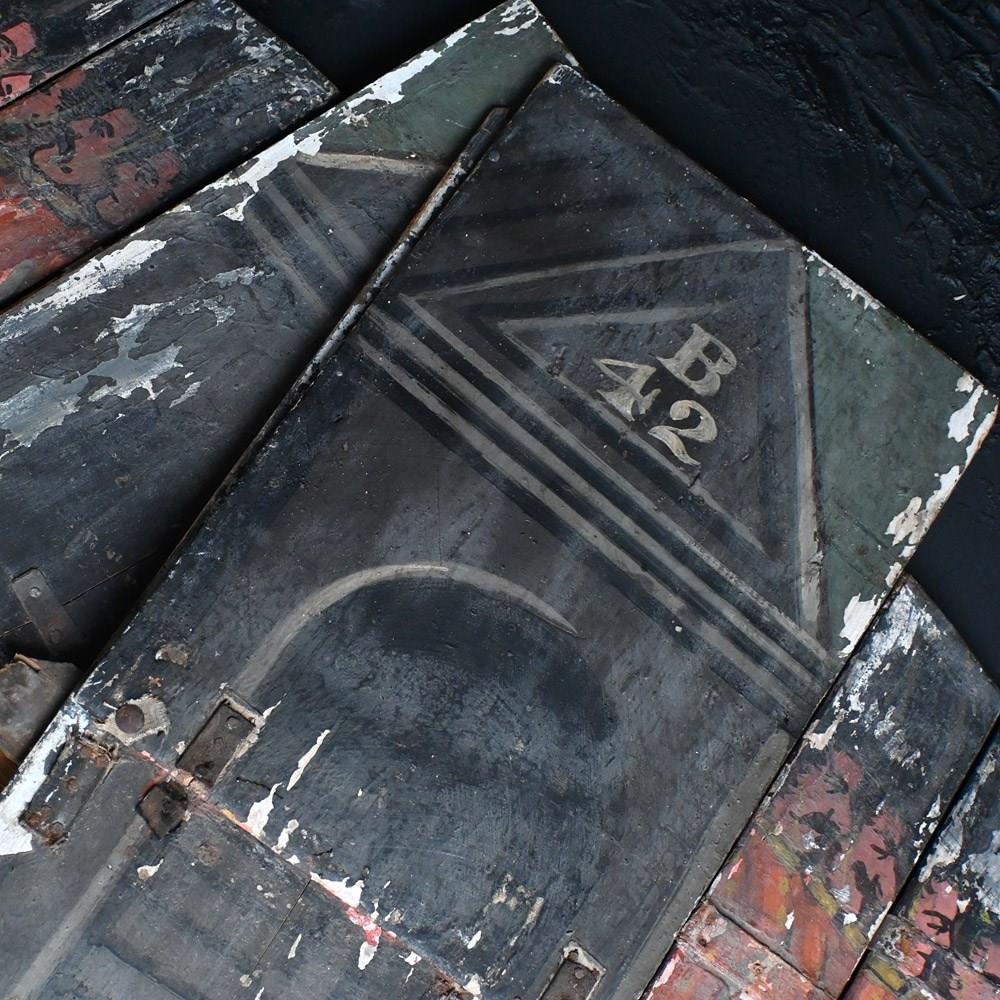
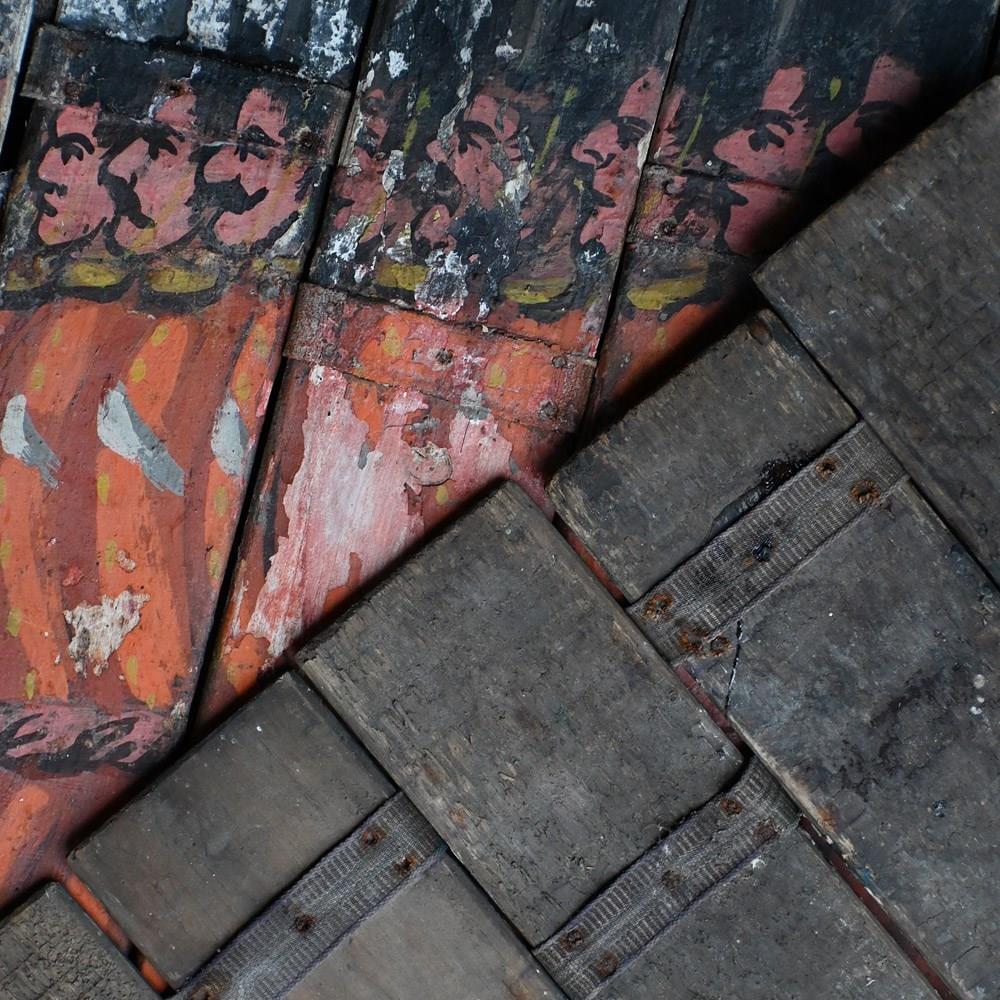
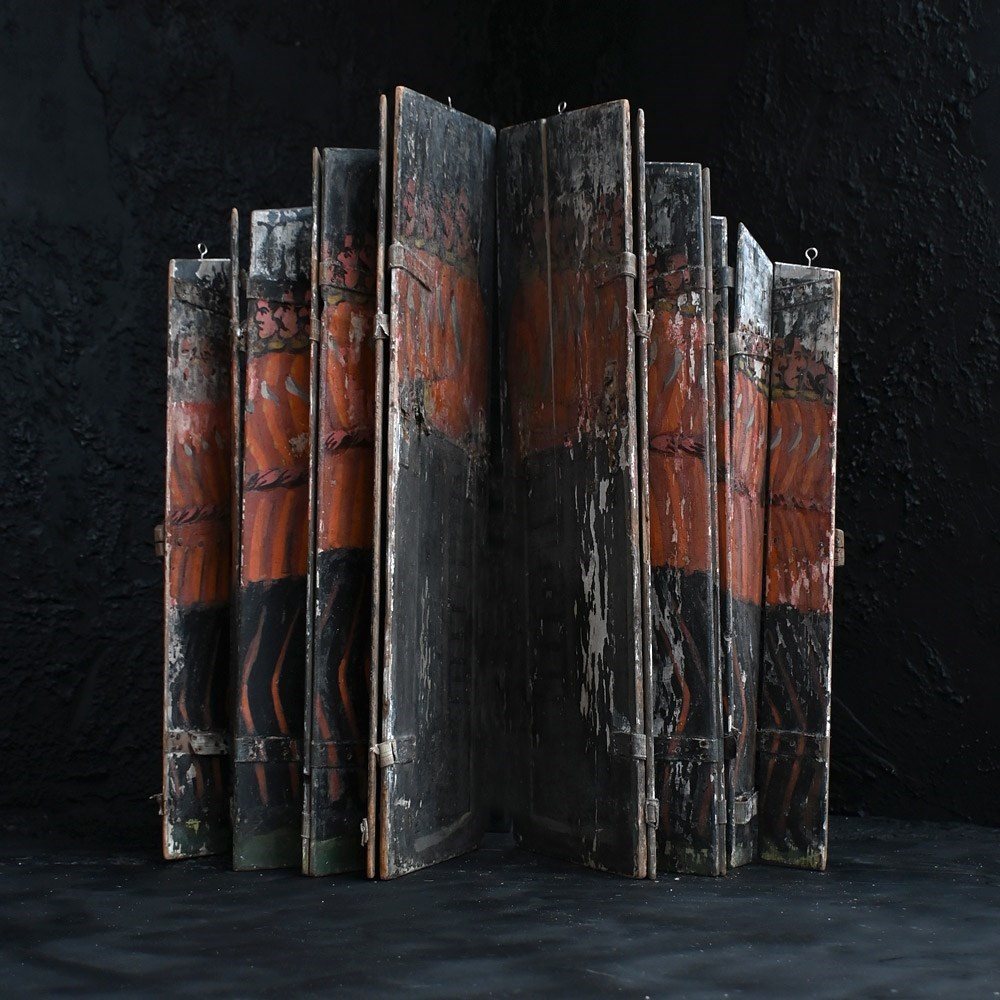
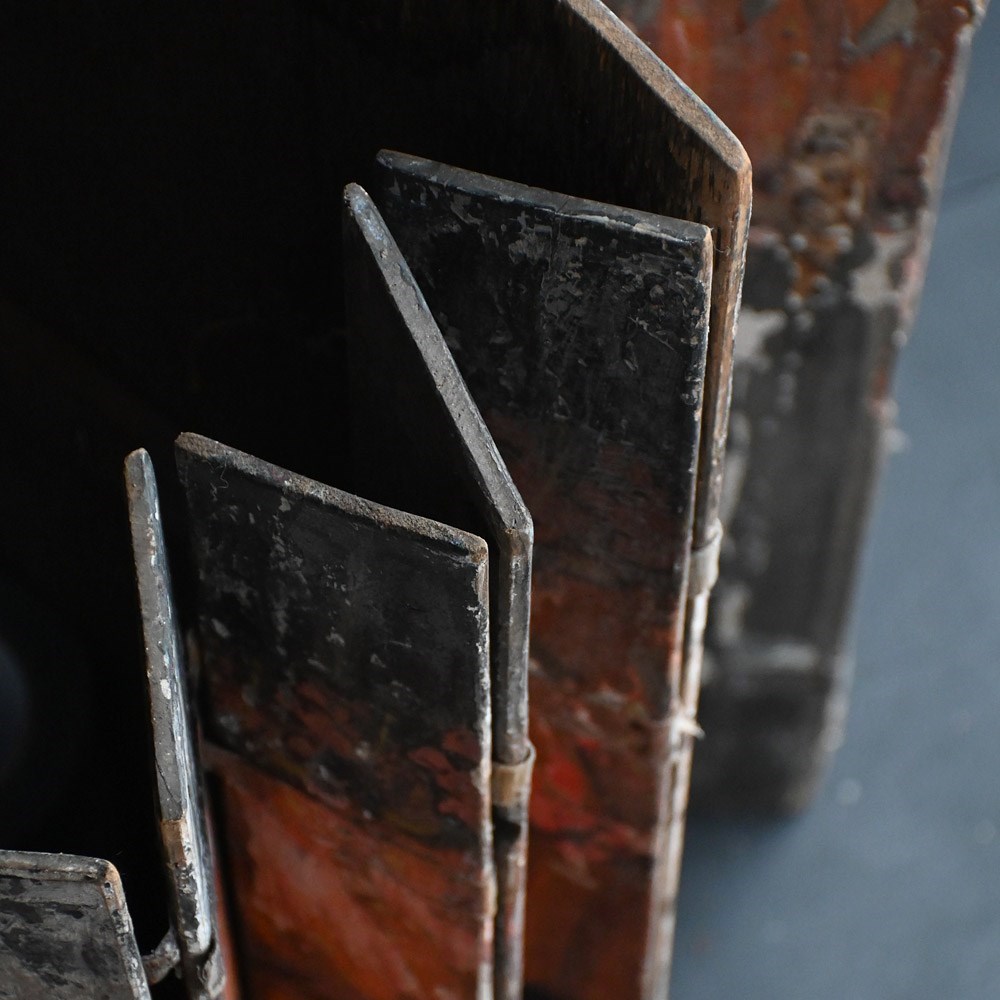
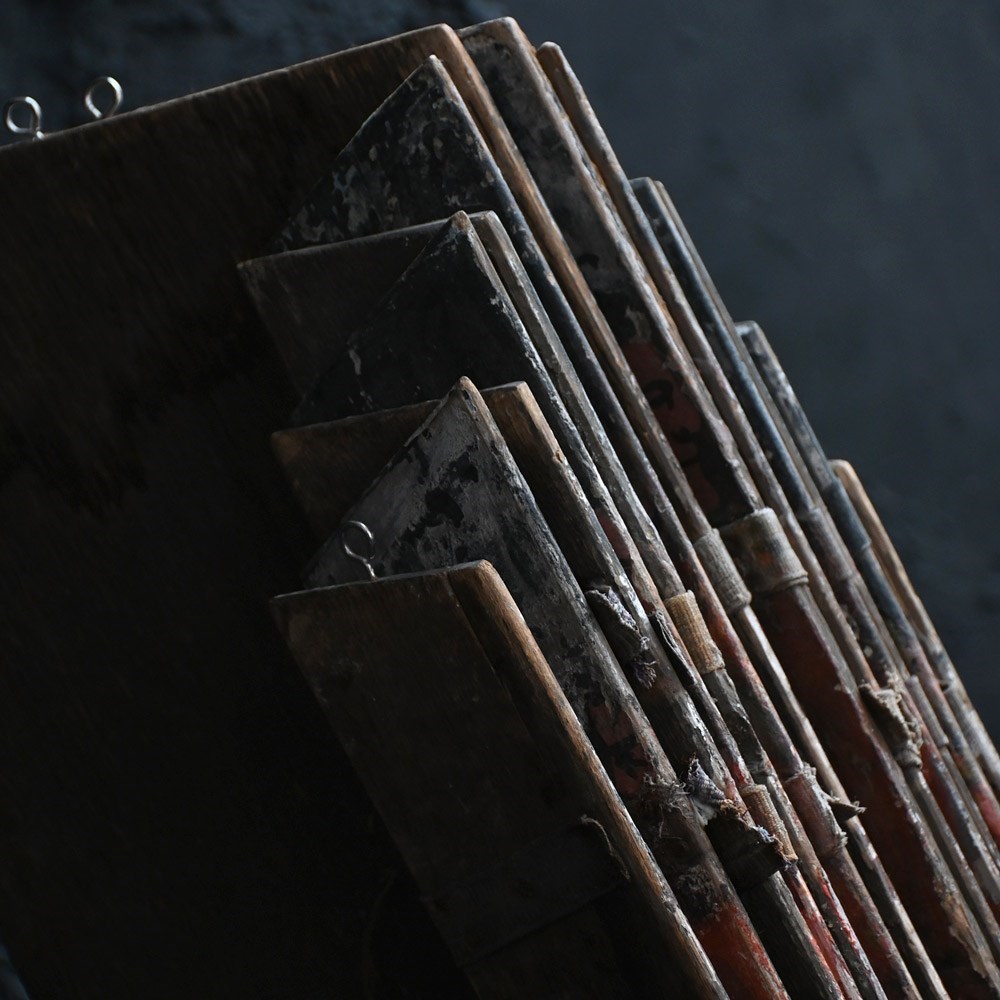
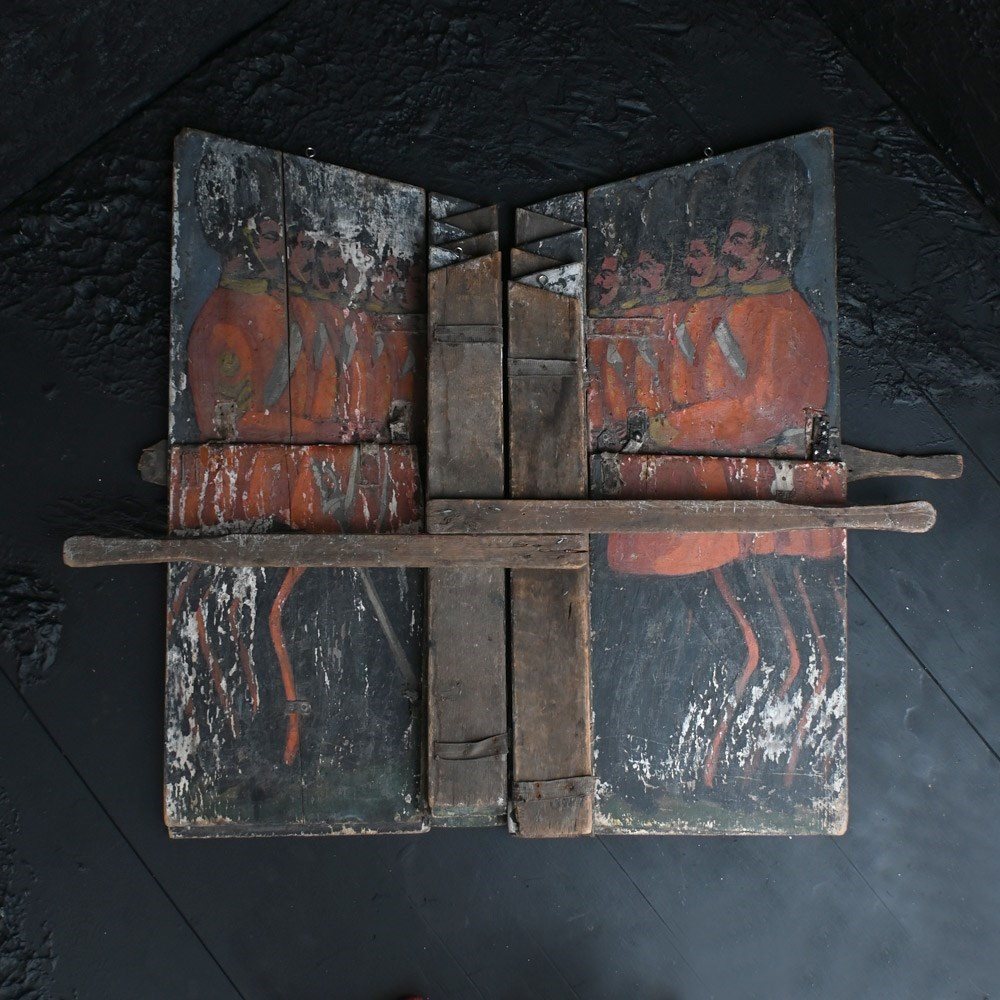
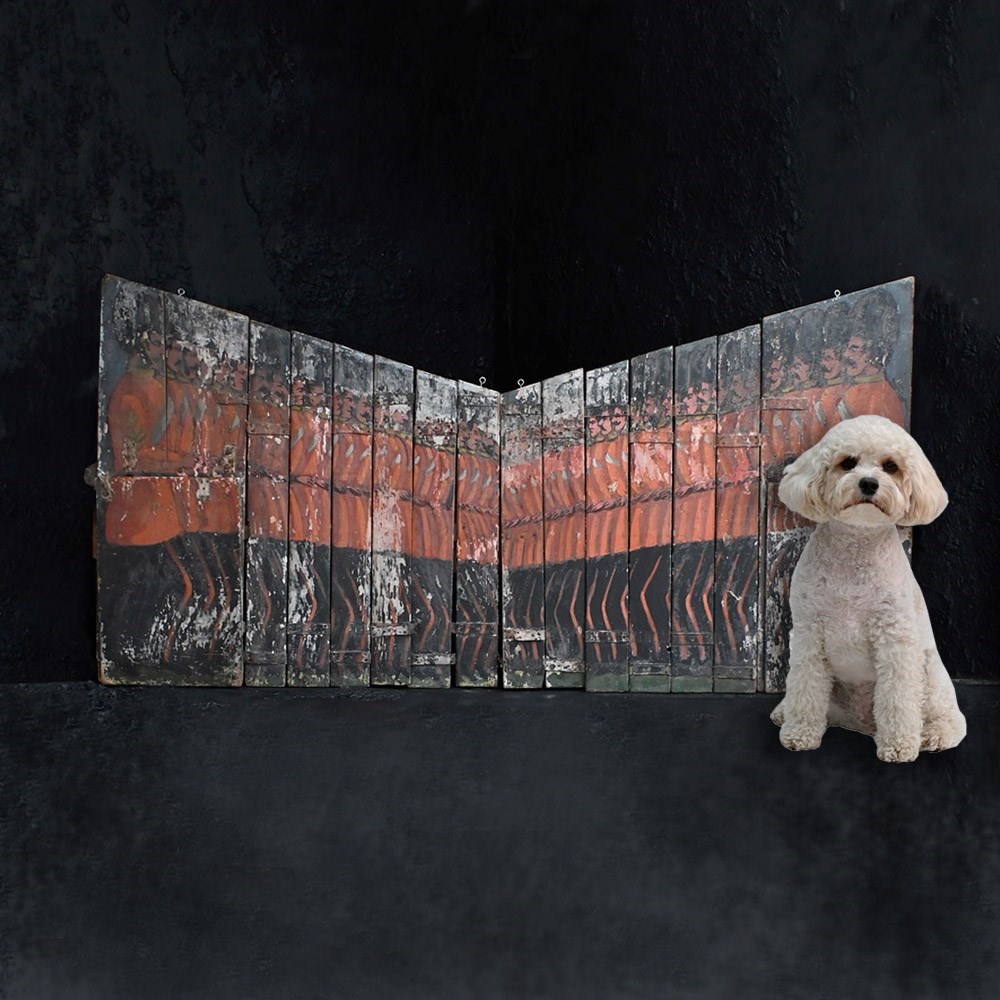
The very rare pair of metamorphic trick scenery boards each hinged and hand-painted to wood and canvas, comprising of two rows of the Queen’s guard appearing from their guard houses, sign written with the numbers B42 and A41, the soldiers appearing to emerge by un-folding into a two rows of twenty five soldiers each, in their distinctive red tunics, on the march, surviving from the latter part of the nineteenth century and from the renowned collection of John Michael Blundall (1937-2014).
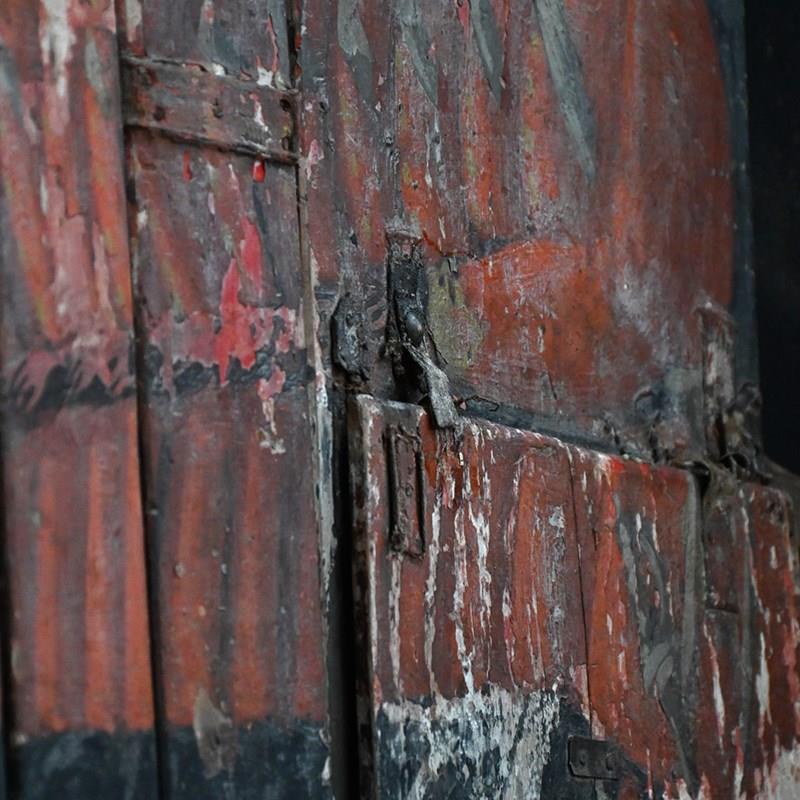
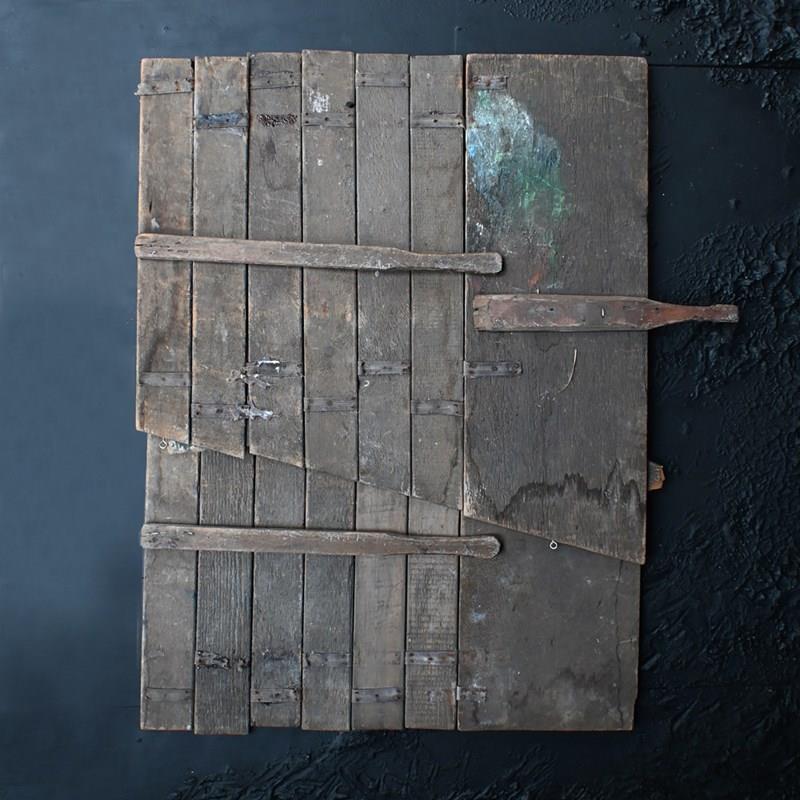
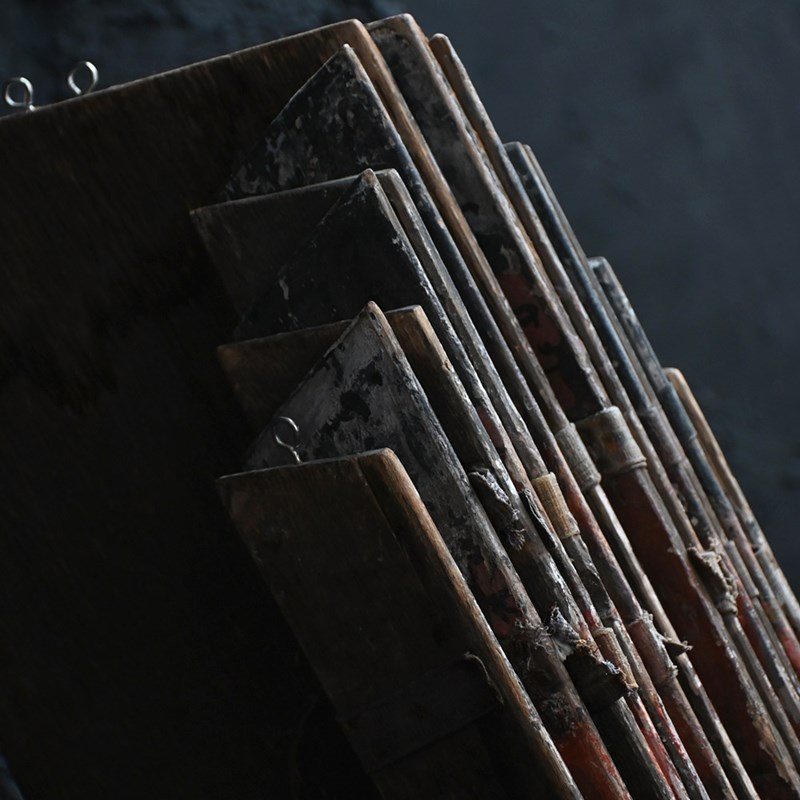
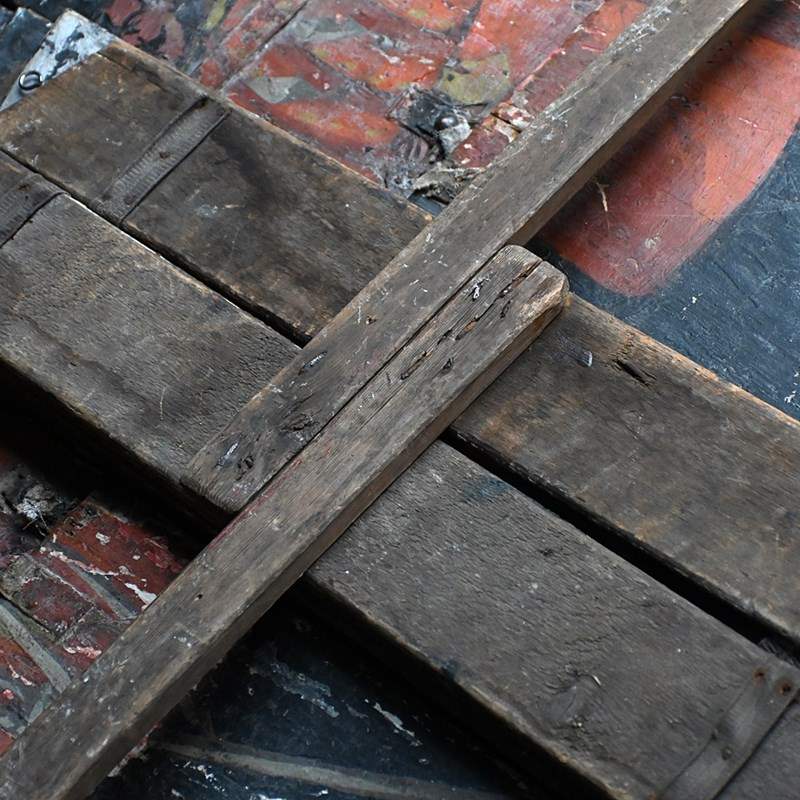
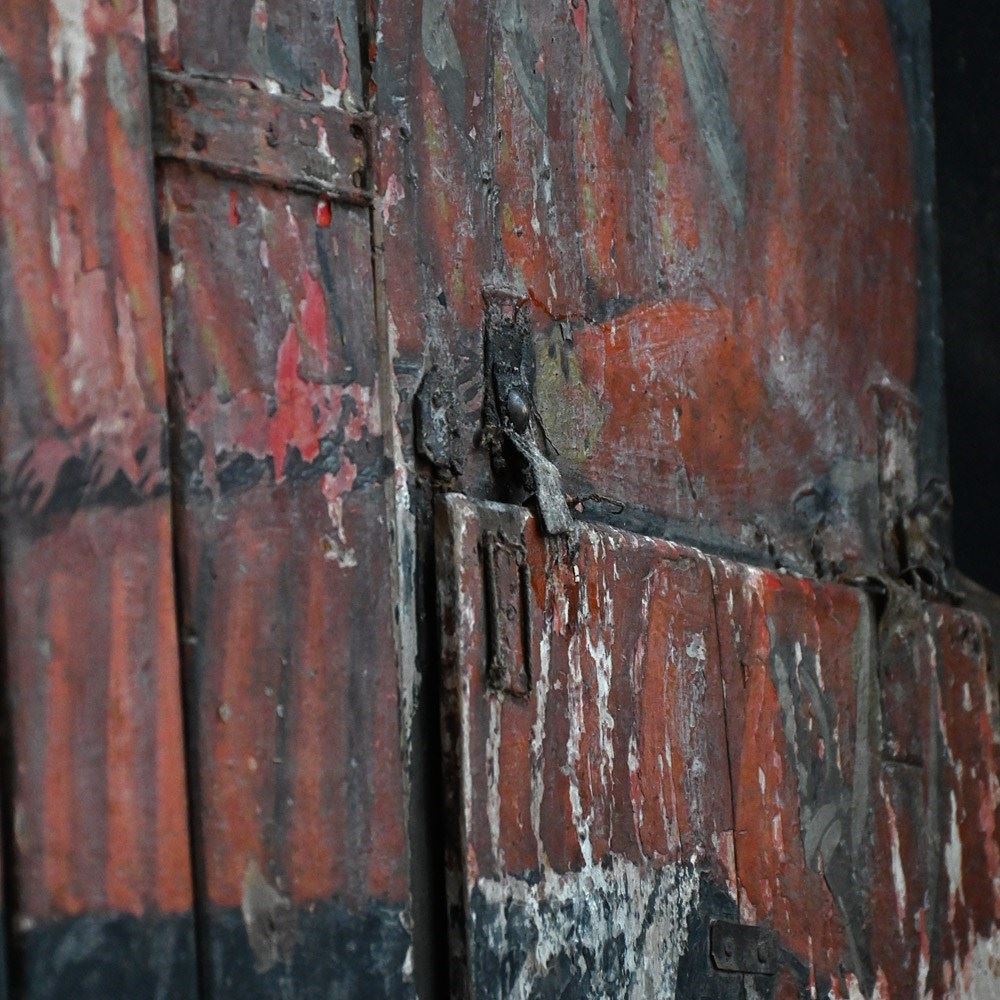
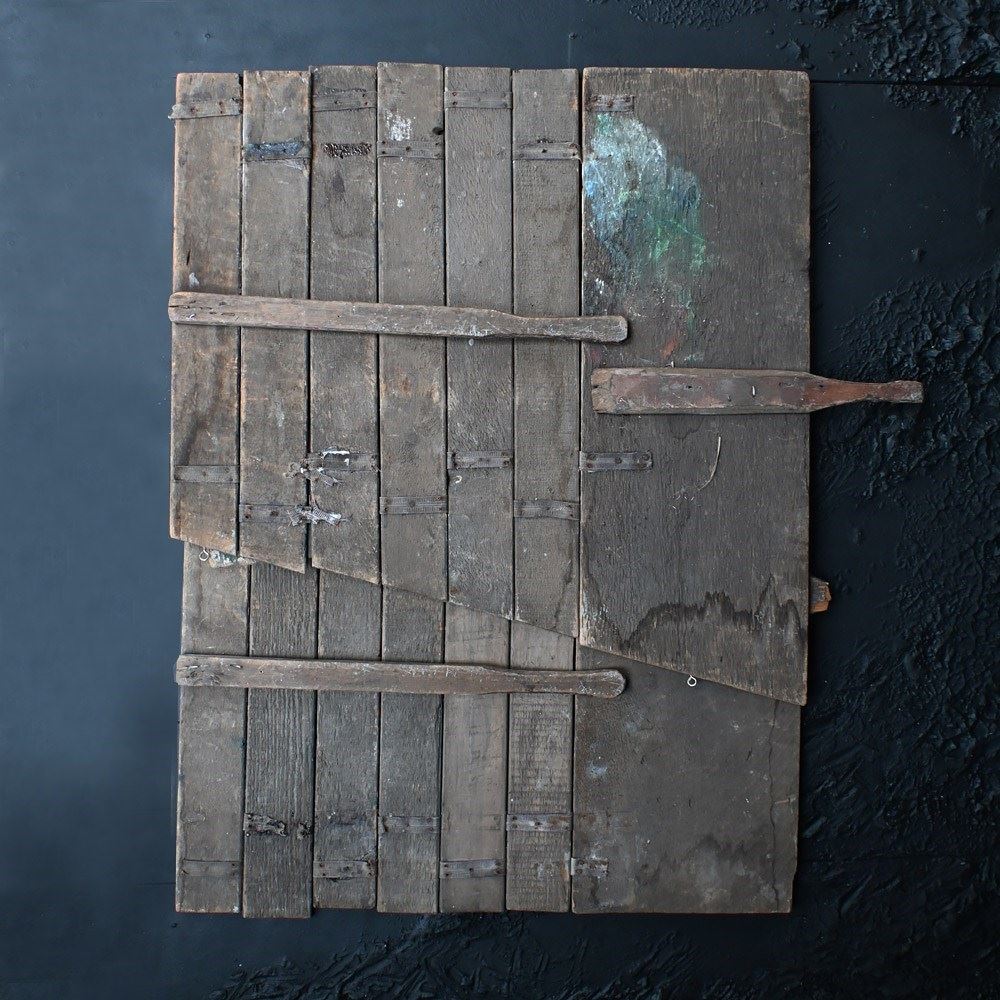
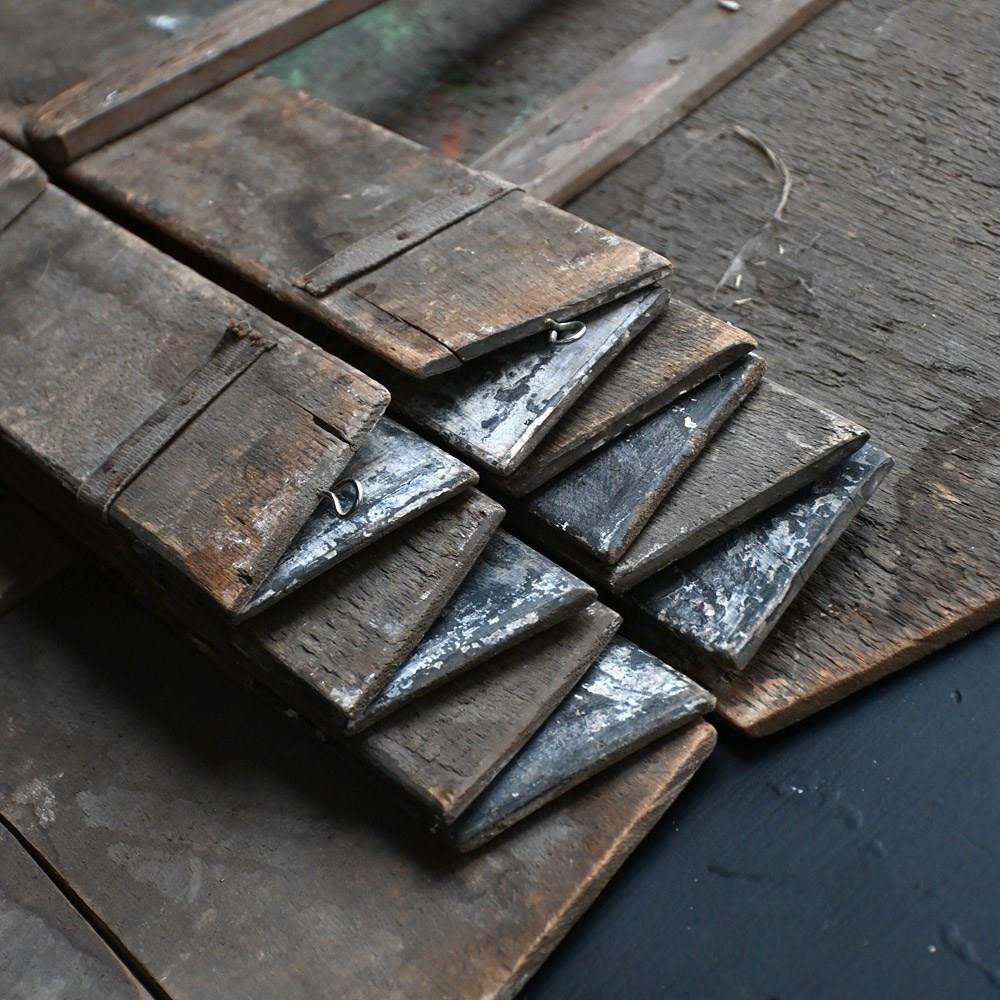
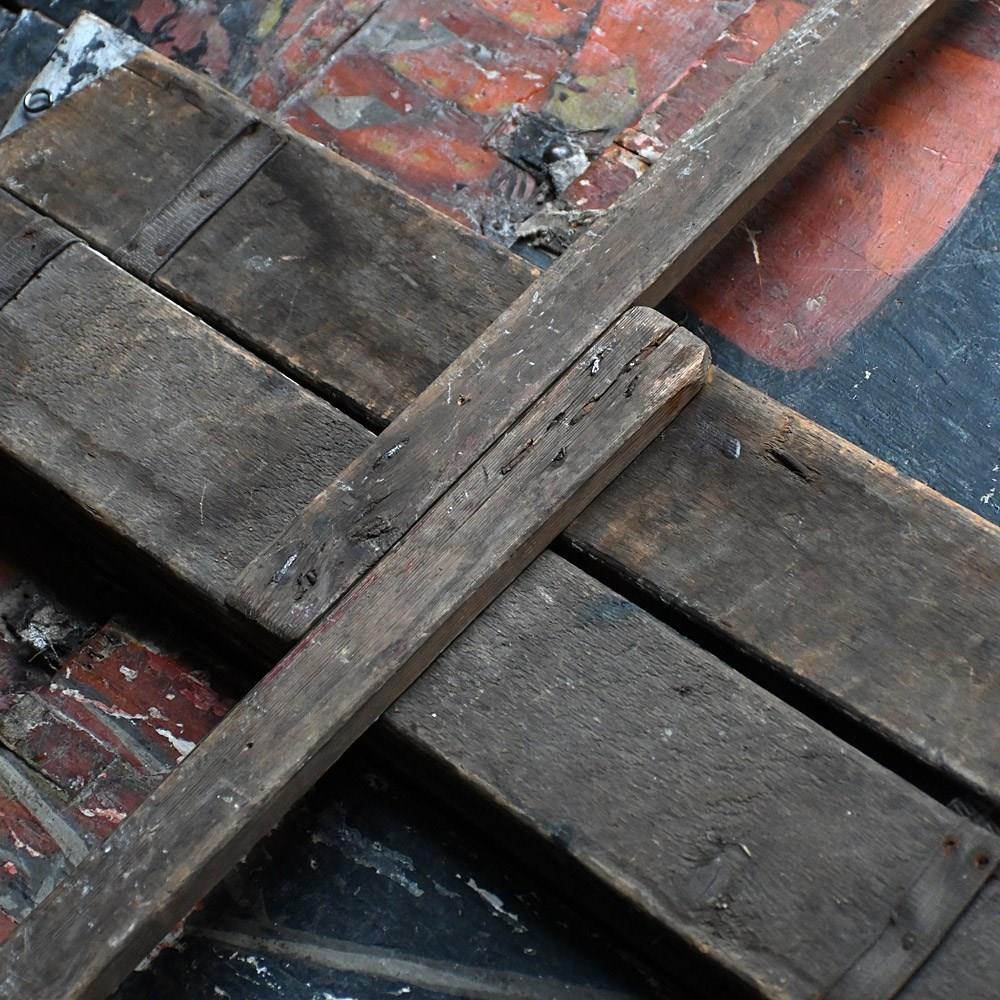
The condition of the scenery boards is totally un-meddled with and there have been no attempts to restore the flaking to the original paintwork (only natural wax has been applied to keep things tight on the surface). They are relatively fragile having been well used in performance and the canvas hinges are delicate with some lacking. We have added small hooks for wall hanging but they could be removed. The original tactile wooden handles are all present.
The popular pantomime required frequent and smooth trick scenery changes for spectacular and magical effects such as trees growing out of rocks, burning palaces which collapsed, earthquakes, thunder and lightning. Waves were turned on spindles and mechanical soldiers such as these marched across the stage, which 'was adapted for scenic processions leaving an extraordinary depth in the rear, as likewise large spaces on the sides’.
Theatre of objects is a theatre where the human figure (under the guise of an actor, a puppet or another representation) is not present, and where objects, in a broad way, are favoured by the dramaturgy to the detriment of the verbal aspect. It is predominantly a visual theatre, having more in common with the figurative arts than other forms of theatre. The actor, when he is present, assimilates himself to the space, sometimes through the use of stage elements or costume, and he does not necessarily portray a character. The human being can be reduced to an object or merely be a pure scenic presence among others next to objects which acquire their own existence by the artistic dignity that is given to them. Mobile wings, masks, figures, mechanical constructions, motorised backdrops, light and visual effects in motion are the protagonists of the scenic event and not (as is often the case with live theatre) just simple elements that complement the play.
Examples of scenic or theatrical objects with symbolic functions can certainly be found in all eras and cultures in the history of theatre, whether they were specifically written as part of the dramaturgy or not, but these meaningful objects did not truly have the status of a character. Starting from the end of the 19th century when staging took a leading role, prescribing a framework of unity where each element served the play, objects and actors played side by side and became essential in expressing the meaning of the play.
One of the world’s leading puppet masters John Blundall (1937-2014) amassed a superlative collection, both in qualitative and quantitative terms spanning centuries and countries of puppetry traditions across the globe. One of the country’s, if not the world’s leading designers, makers and performers of puppet theatre Blundall made characters not only for television but also for his own theatre in Birmingham.
A highly respected figure on an international stage he had access to some of the world’s best known puppeteers and collectors allowing him to build up an enormous international archive of puppets and puppet theatre-related material. Nearly four years after his untimely death in Glasgow this pair of boards are offered for sale after many a year in his private collection. Blundall also managed to give a home to the largest surviving group of marionettes from the famous 19th century Tiller-Clowes family troupe who operated from 1873 until WWI. This group comprises more than half of a collection which surfaced in 1945 and was subsequently split, with one half being donated to the V&A.
A very rare opportunity to acquire these magical and important pieces of early theatre and puppeteering history which are hugely decorative.
Condition
• Faded and worn surface with flaked paint revealing pine wood
• Loss of painted surface and worn wooden detail with missing sections
• Some of the canvas attachments have come loss but overall firm
• Repaired areas with metal sections shown
• Rusty old nails are present
• Both numbered hinged flaps are not attached
• One pine paddle is broken as shown to the left-hand side example
• Antique 100-year-old working item, please expect this in the condition
Shipping & Handling
• UK Buyers: Delivery available via trusted couriers, including bespoke service for large or fragile items
• International Buyers: Shipping available worldwide — please contact us for a custom quote before purchase
• We highly recommend tracked, insured, and crated shipping for this item due to its rarity and fragility
• Shipping time: 3–5 working days to dispatch
Our Guarantee
We pride ourselves on transparency, craftsmanship, and customer satisfaction. All items are described and photographed as accurately as possible. Please inspect all photos and ask any questions prior to purchase — we are here to help ensure confidence in your decision.
Returns & Cancellations
• Returns accepted only if the item is not as described, reported within 48 hours of delivery
• Change-of-mind cancellations are not accepted
• Return shipping (including insurance) is the responsibility of the buyer unless otherwise agreed upon
Photographic Rights
All images are the property of The House of Antiques Ltd. For usage rights or publication inquiries, please contact us in advance.
Item Info
Seller Location
Essex, London
Item Location
United Kingdom
Seller Contact No
+44 (0)7568 151752
More from THE HOUSE OF ANTIQUES